
-
AZ1065, Baku city,
Academic Shafayat Mehdiyev Str., 91 -
Mon. - Sat. 9.00 - 20.00,
CLOSED on Sunday

The Silver Age of Azerbaijani Photography History
Since ancient times, people have tried to depict their surroundings—including the environment, flora, fauna, and even themselves—in visual form. In those early periods, more durable and robust materials were used. The earliest rock paintings in the territory of Azerbaijan—such as those at Gobustan, Azix Cave, and Gamiqaya figures—have been preserved to this day.
Later, these depictions found their reflection in oral literature, fairy tales, and epics. Motifs such as seeing one’s reflection through magical mirrors or enchanted water, as well as the observation of events, appear in literature. In written works, these motifs are also encountered in the poetry of figures like Nizami Ganjavi and Muhammad Fuzuli. Even as the art of painting developed, people continually desired quicker and easier means to capture images.
With the advent of photography in France, this art spread throughout the world. In Azerbaijan, the development of photography began in 1861 with the taking of the first photographs related to the Baku Treasury. These photographs were captured by Lieutenant Aleksandr Uliski, a topographer in the Russian army. During a military expedition in the Caspian Sea, while serving as a topographer, Uliski created the first examples of Azerbaijani photographic history with his images.
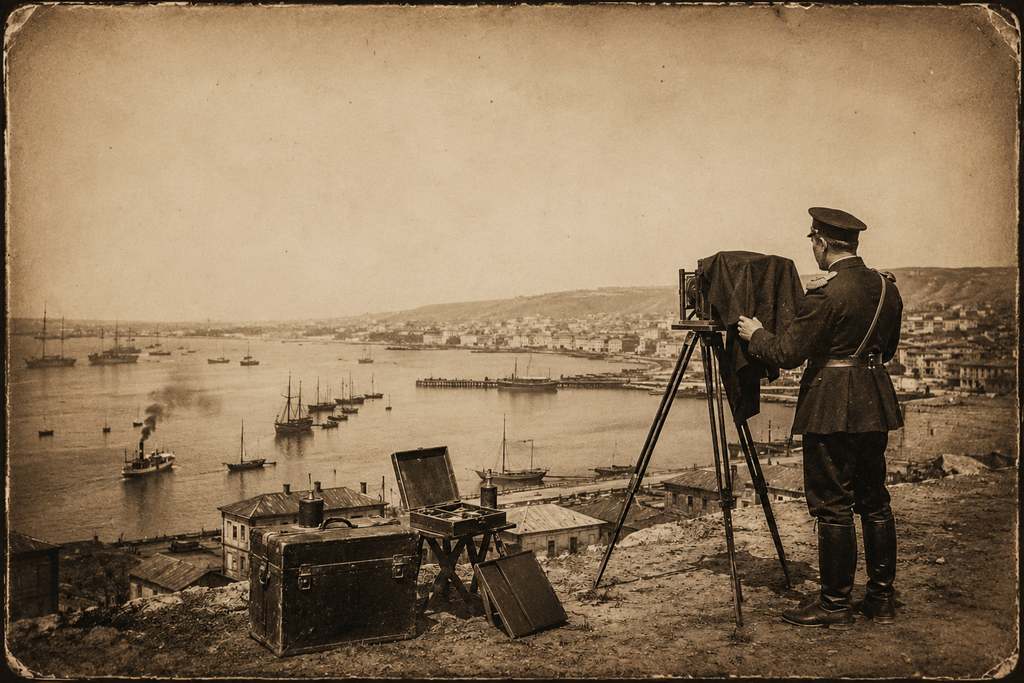
In 1870, the Russian Tsar permitted the influx of foreign capital into Baku’s oil industry. This decision set in motion, for the first time in history, what became known as the “Baku oil boom.” The rapid development of the oil industry drew global attention to Baku, and people from every corner of the world—both the rich and the poor—began flocking to the city. Baku also transformed into a center for new technologies and specialists.
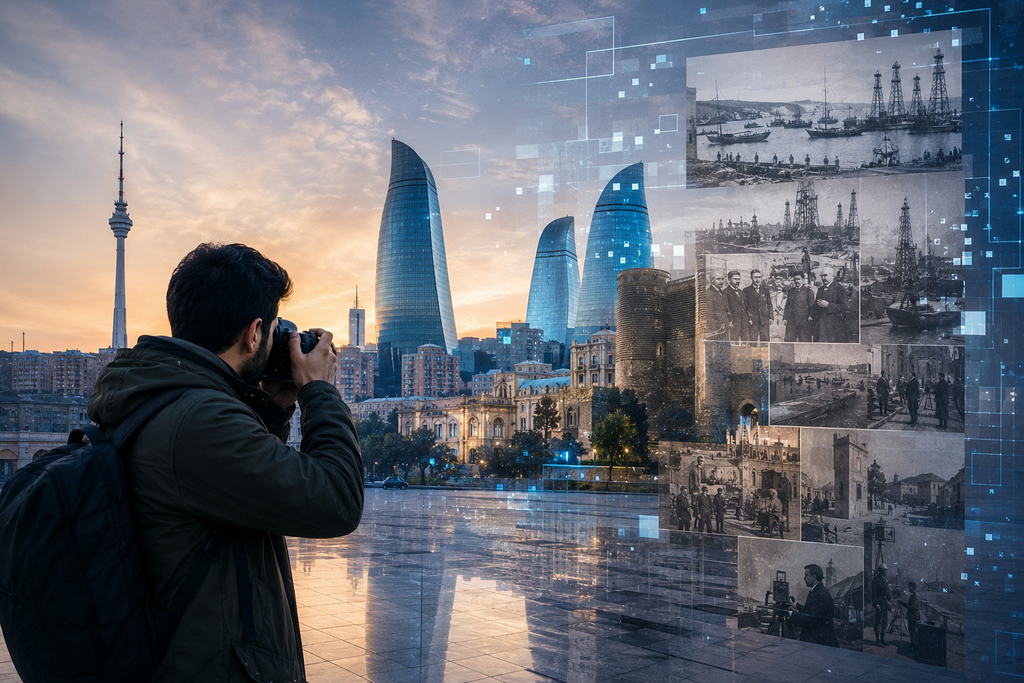
During this period, photographers from Europe and Russia also began arriving in Baku. Major capitalists had portraits taken of themselves and their companies, which were then exhibited at industrial fairs abroad—a practice that later evolved into a tradition. In the photo studios opened in Baku, both portraits of the wealthy and industrial photographs reflecting the development of the oil industry flourished. A fierce competition arose among photographers, whose successes were showcased in advertisements and on business cards. Studios with names such as “Rembrandt,” “Vizit Portret,” “M.E.Şitova,” “Kabinet Portret,” “Svet i Ten,” “Ruskoye Fransuzkiye Fotoqrafiya,” “B.Sionqlinskoqo,” and others were in operation.
Initially, these studios were called “aksxana,” but later they became known as “photopavilions” or simply “studios.” At various times, studios of photographers such as A. Mişon, Yulian Zelinski, “Fotografiya Jorja Baku,” and Fedor Kokovix operated in Baku. In other major cities of Azerbaijan—for example, Lankaran, Ganja, and Sheki—photo studios were also present. In Ganja (known as Yelizavetpol at the time), M.A. Abbasov worked as a photographer during the period from 1880 to 1910.
Photographers of that era were engaged in printing and selling special prints (cards). They explored various genres such as studio, industrial, ethnographic, landscape, and street photography. Photography was developing as a form of art, while at the same time becoming a part of history. Although photographers produced technically advanced images in luxurious studios, photos depicting the lives of ordinary people have also survived to this day.
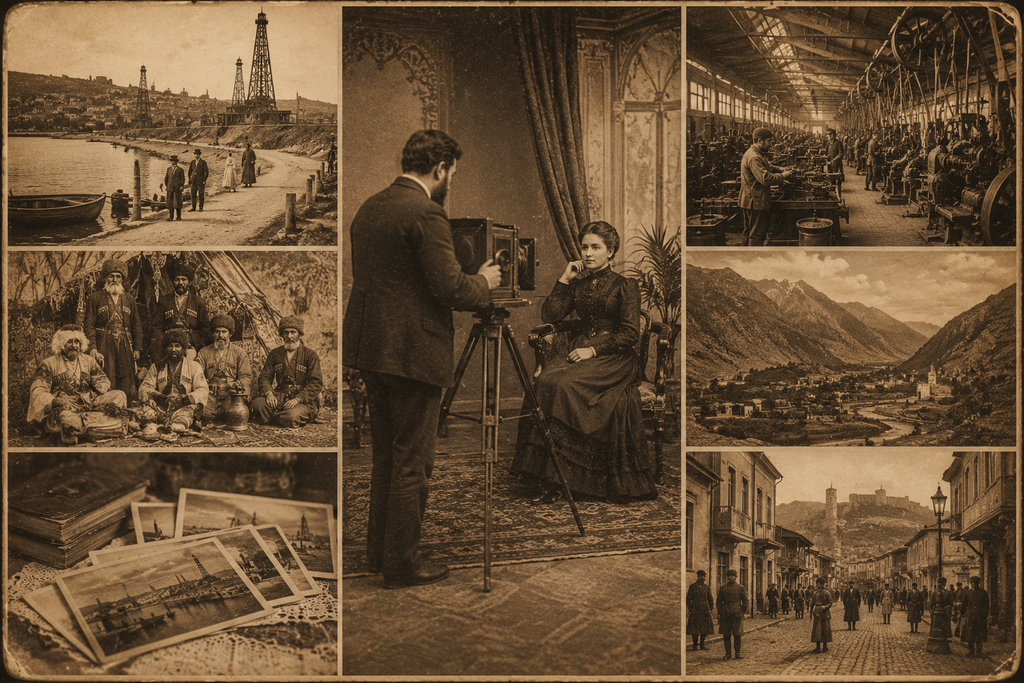
At that time, Azerbaijan was a destination frequently visited by traveling photographers. The Baku port served as a brief transit point for the sea route to Central Asia. The enigmatic scene of Baku’s oil wells created an image unlike any found elsewhere in the world. Oil fountains, fires, the newly established oil industry, and houses built in the European style provided a striking contrast to the natural surroundings. In Baku, companies trading in photographic equipment and materials received orders from around the globe.
This period is regarded as the “Silver Age” of Azerbaijani photography history and is considered a significant milestone in the development of this art in the country.
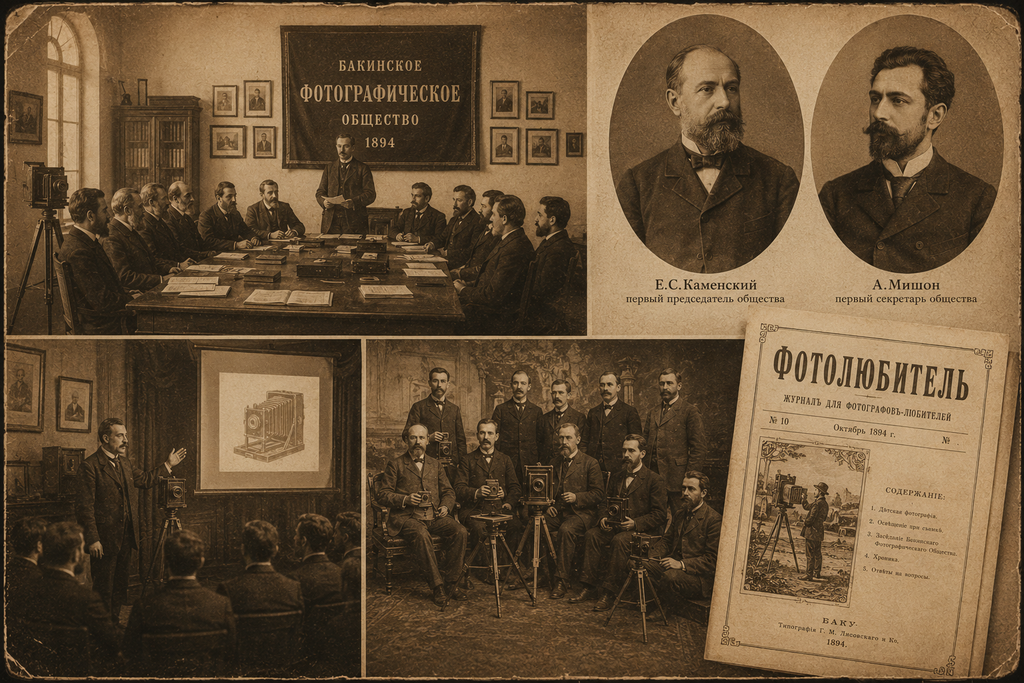
With the aspiration to promote photography as an art form, the first steps toward establishing a photography association were taken in 1890. The association’s members applied for official registration with the Ministry of Internal Affairs in St. Petersburg, and only four years later, in 1894, were they able to celebrate this achievement.
The provisions of the charter of the Baku Photography Association remain relevant to this day. The association held its first meeting on October 24, 1894. E.S. Kamenskiy, the director of the Real School, was chosen as the first president, while A. Mişon began working as the secretary. As a leading force in the association, A. Mişon delivered lectures on photography at Z. Tağıyev’s theater and organized training sessions to enhance the photographic knowledge of the members. The activities of the Baku Photography Association were reflected in the “Fotolyubitel” journal published at the time.
There was also an initiative by the association to organize joint exhibitions with Georgian photographers. On December 15, 1896, for the first time, a collective photograph was taken using a magnesium mixture in a circus building. Some sources note that the association had a fashionable “photo vignette” at that time. Unfortunately, these photographic examples have not survived to the present day.
Information about the association is available up to 1902, though details about later years are sparse. Between 1899 and 1907, A. Mişon published a photo journal titled Caucasus and Central Asia in Photography and Summaries. In 1905, during the upheavals that swept across all of Russia, A. Mişon’s studio was raided twice, which led to his relocation from Baku. Some sources suggest that government scrutiny of his activities in Baku eventually prompted him to join the revolutionary movement.
Between 1914 and 1918, the first aerial photographs of Baku were taken. These images are associated with Korvin Kerber, an officer of the Baku Military Naval Aviation School. The first views of Baku from the air continue to captivate audiences today.
Among the stores selling photographic equipment, companies such as “Sport,” the Zakharenko Brothers, “Kafqazskiy Tovarişstvo K,” “Ermansı K. and K_o,” and “Grinberg I.M.” were active.
For a long time, Azerbaijani names were rarely seen among photographers. It was only after the 1920s that names such as Alasgar Alakbarov, Azizbala Hacıyev, and Mircavad Axundov began to emerge in the field of photography. Apparently, certain obstacles existed for pursuing this art in a predominantly Islamic country.
During the period of the Azerbaijan Democratic Republic (1918–1920), photographs taken by Lev Daşkeviç—who officially served as the state photographer—were exhibited at the 1919 Paris Peace Conference in connection with the March massacres of 1918.
From the very inception of the Soviet Union, photography became one of the principal tools for promoting communism. The collective farming system, the electrification of the country, the development of Soviet industry, and socialist realism—which celebrated the socialist ideology—were also advanced through photography. Photographers such as Lavrenti Breqadze, Fikri, and Mirfazil Mirmövsümov became well known during this period.
During these years in Baku, photo ateliers and studios such as “Krasnaya svet,” “Qelios,” “Adam i Şitov,” “Foto-Kino narkomprosa ASSR Qosudarstvniy Fotoqrafiya,” “Şirvan,” as well as those run by Azizbala Hacıyev, A.B. Saxnovskoqo, and the cooperative “OKO,” were active.
This article reflects the important milestones of Azerbaijani photography history and the various paths through which this art developed. Photography has played a crucial role not only in creating images but also as an echo of history, culture, and social change.
The activities of the Azerbaijani Soviet Photography Union (Azsoyuz) also fall within this period. Photographers such as Ildırım Caferov, Barisov, Şevtsov, Glazkov, Qazarov, and Qrişina worked within this photo agency. During this time, photo newspapers were published, and photography became one of the main means of promoting socialism.
During World War II, Baku experienced another oil boom. The city, which had become the center for fuel supply during the great war, also hosted military hospitals. Vladimir Kalinin’s photo albums from that period have survived to this day. After the war, the famous trophy photo cameras began to reappear in Baku, and in the post-war period, photojournalists such as İsay Rubençik, Vladimir Kalinin, and Solomon Klişov embarked on their creative careers.
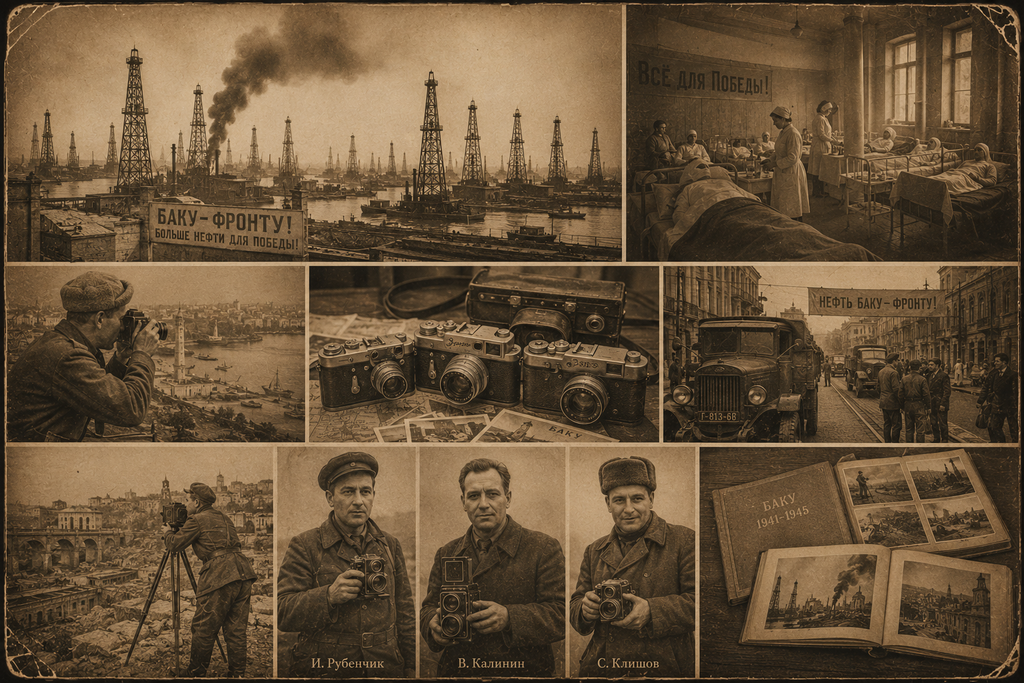
From the 1950s onward, the photographs of photographers such as Oleq Litvin, Yuri Raxil, Kamal Babayev, Faiq Racabli, Yaşar Xalilov, Rafiq Nağıyev, Hüseyin Hüseyinzada, Cahangir İbadov, Valeri Şustov, Moisey Frişman, Anvar Novruzov, Kelman Kaspiyev, Abram Bekker, and Rashid Eldarov were increasingly published in the media. In addition to photojournalism, photo ateliers operated in every city and district center throughout Azerbaijan. Enthusiasts who developed an interest in photography also engaged closely with this art.
After the 1970s, a new generation of photographers emerged. Photographers such as Ağali Mammadov, Farid Ashrafoğlu, Miralekbar Agasayev, Farid Xayrulin, Albert Tavakalov, Parviz Quliyev, Mixail Çianurov, and Bahadur Caferov were documenting the photographic chronicle of the era through their work. At that time, the photo chronicle department of the AzertAc State Information Agency organized photography courses and training sessions. In Baku’s photo stores, in addition to selling photographic equipment and materials, photographers would gather for discussions—and on one such occasion, the world-renowned photographer Henri Cartier-Bresson participated as a guest.
During this period, photo albums, prints, and advertising shoots further fueled the creative output of photographers. The industrial photography sector received an additional boost at the Exhibition of the Achievements of the National Economy in Moscow. Photographers such as Anvar Qaragozov, Lev Shvarts, and others participated in these exhibitions with their works. Baku oil, the image of the oilman, and other representatives of socialist labor found their place in the creative works of photographers. As carriers of socialist ideology, photographers continued to advance their art. Contests such as “Interpresfoto” and “Press Foto” were widely held among socialist countries. In 1974, Rafiq Nağıyev won the silver award at the World Press Photo competition. Although socialist realism was subject to strict censorship, many photographers preserved in their personal archives the images they truly desired to create. Unfortunately, many of these photographs were lost without ever being publicly exhibited.
In the 1980s, photographers whose work came to the forefront of the period’s media included names such as Rauf Umudov, Şahin Sarkarov, Mirheydar Hashimov, Elxan Kerimov, Ilham Kisiyev, and Keram Nabiyev.
In the final years of the Soviet Union—from the 1970s through the 1990s—the “Xazar” photo club operated in Baku. Its members won awards and received honorable placements at FIAP (International Federation of Photographic Art) competitions. Among the club members were renowned photographers such as Oleq Səmədov, Sənan Alesegrov, Aliseyran Babayev, Rafiq Hüseyinov, Vaqif Mirqasimov, Timur Cəfərov, Ruslan Amstislavskiy, Vadim Allaxverdiyev, and Natalya Luferova.
These periods are considered pivotal in the development of Azerbaijani photography. Photography has played a significant role not only in the creation of images but also as an echo of history, culture, and social transformation.
The dissolution of the socialist bloc brought about major political upheavals. During this period, many photographers emigrated to foreign countries, while Azerbaijan itself had to endure difficult times marked by protests, wars, and changes in government. Historical events such as the freedom movement, street clashes, life in refugee camps, and the First Nagorno-Karabakh War became central themes for photographers. During these years, photographers such as Oleq Litvin, Hüseyin Hüseyinzada, Farid Ashrafoğlu, Ali Qafarov, Ilqar Caferov, Mirnaib Hasenoğlu, Xalid Asgerov, Rasim Sadixov, Tahir Caferov, Mehdi Abbasov, and Elnur Babayev depicted these events in their works. The official photo chronicle of the period was captured by photographers such as Rafiq Bagirov, Oktay Mammadov, and Sucaddin Hüseyinov.
After 1993, new photographic technologies and materials began to be introduced to Azerbaijan. As engaging in photography became easier and more accessible during this period, the number of both professional and amateur photographers increased.
In 1993, Rafael Qambarov took the first unofficial steps to unite Azerbaijani photographers under one organization. In 1995, the first photo exhibition titled “Azerbaijani Photographers” was organized in the French city of Nant. Following this exhibition, photographers decided to create an organization to bring together photographers and photography enthusiasts. On November 20, 1998—exactly 100 years after the establishment of the Baku Photography Association—the Azerbaijani Photographers Union (AFB) was officially registered with the Ministry of Justice of the Republic of Azerbaijan. The founders of the union were Rafael Qambarov, Asim Talib, Namiq Mammadov, and Mirnaib Hasenoğlu. The charter of the AFB echoed that of the Baku Photography Association from a century earlier by stating its aim to promote photography as a form of art.
In 2002, the “Ayna-1” and in 2007 the “Ayna-2” International Photo Festivals were organized. Among the guests of the AFB was the world-renowned photographer Josef Koudelka. The union actively participates in photographic events held in various countries around the world. In 2016, in the 32-month-long photo album project “Say Cheese,” organized together with Eastern Cooperation countries, the works of Azerbaijani photographers were also featured. The AFB undertakes projects such as researching Azerbaijani photography history, collecting photographic archives, and establishing a library and photo museum. The union is preparing to celebrate its 30th anniversary and will continue its efforts to develop the art of photography in the future.
Among the representatives of the new generation of young photographers are talented artists such as Sevinc Aslanova, Cingiz Samedzada, Shahin Hüseyinov, Asiyyat Fatullayeva, Faxriyya Mammadova, Emil Xalilov, Rena Afendi, Shamil Asimoglu, Sitara Ibrahimova, Rufat Abbas, and Orxan Aslanov. By employing modern technologies and innovative creative styles, they are working to elevate Azerbaijani photography to a world-class level.
The “Silver Age” of Azerbaijani photography has now given way to a new digital era. Modern Azerbaijani photography marks the beginning of a new chapter in history, and there is no doubt that this art will continue to develop further in the future. Photography remains not only a means of creating images but also a vital echo of history, culture, and social change.
Mirnaib Hasanoglu
Co-founder of AFB